
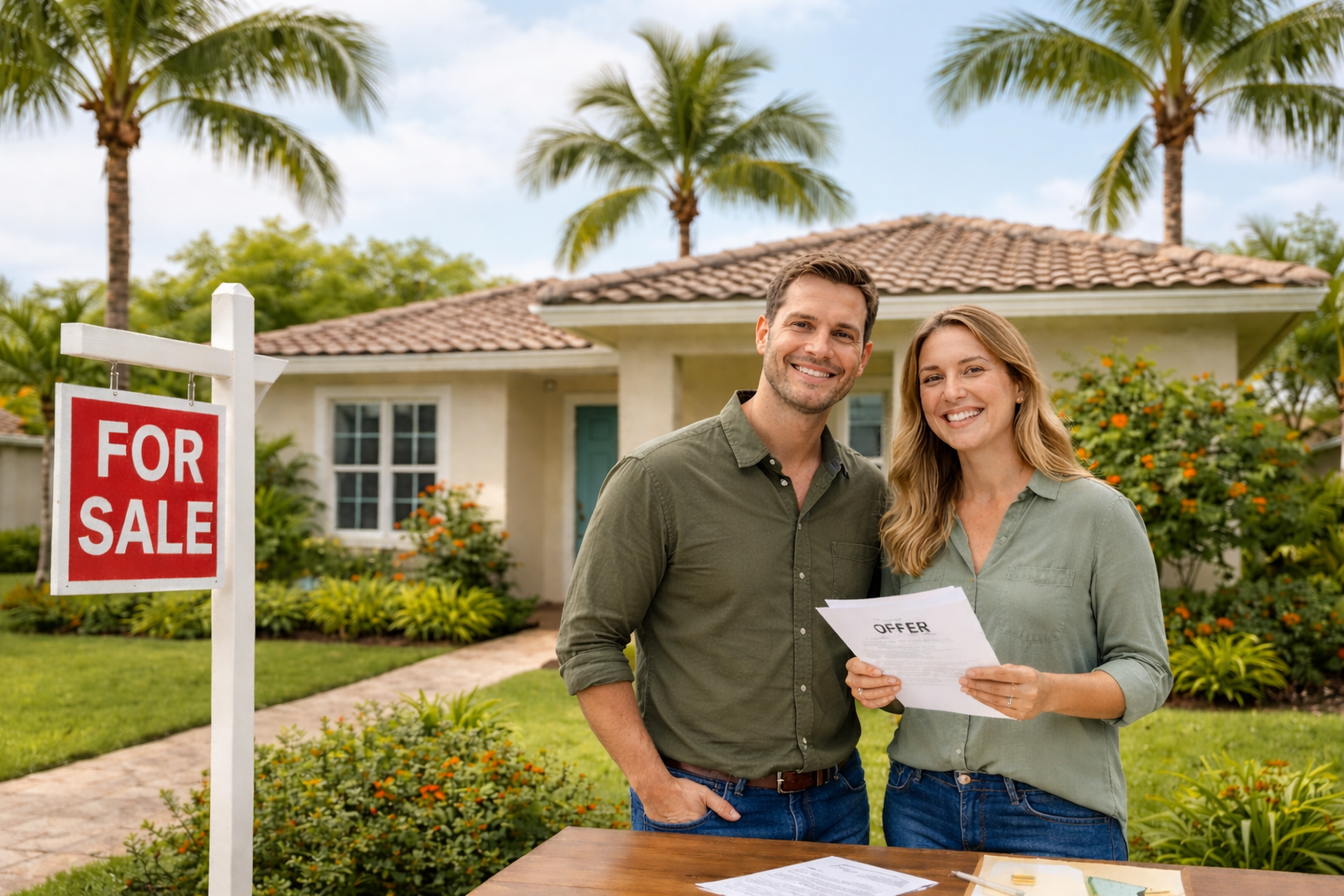
Selling your home in Florida is not just about putting it on the market. It is a financial decision that affects your equity, your timeline, and your next move. In today’s market, the difference between the right agent and the wrong one can mean thousands of dollars gained or lost.
At The Homeowner’s Agent, we’ve worked with homeowners across South Florida through simple sales, complex transitions, probate sale situations, and investment properties. One thing is consistent in every case: strategy matters.
As of early 2026, the market has become more balanced. Home prices have stabilized around $413,100, and properties are taking about 83 days to sell. In this environment, choosing the right agent plays a major role in how much profit you make.
This guide will help you understand what to look for, what data matters, and how to navigate the new real estate landscape in Florida.
Why Choosing the Right Agent Matters More in Today’s Market?
Florida’s real estate market has shifted from the fast-paced conditions of previous years into a more balanced environment. Homes are still selling, but not instantly. Buyers are more selective. Insurance costs, interest rates, and property conditions play a bigger role in decision-making.
This means:
- Pricing must be accurate from day one
- Marketing must reach the right buyers
- Negotiation must be strategic, not reactive
The agent you choose should be skilled in all three.
Understand the New Rules of 2026
Before you interview your first agent, you must understand how the industry changed following the 2024 NAR settlement and the subsequent 2026 Florida mandates.
- Compensation: Realtor compensation has always been and remains negotiable.
- The Buyer Broker Mandate: All over the USA, buyers are now required to sign written representation agreements before touring homes, called an “Exclusive Buyer Broker Agreement” or “Showing Agreement”. Just like when a seller lists their home for sale, they sign an agreement that lays out the nature of the relationship, expectations, and compensation.
- Contract Updates: As new laws, requirements and protections come into play, documents are updated. The most recent updates in Florida include Flood Disclosure, Lease Flood Disclosure, Opt in for Electronic Communications, and Condo Association Rider, just to name a few. Interviewing, hiring and working with a skilled, full-time real estate advisor who is up to date on all new requirements is essential.
Choosing The Right Real Estate Agent in Florida
Step 1: Understand What a Real Estate Agent Actually Does
Many sellers assume agents simply list homes and schedule showings. In reality, a strong agent manages the entire process:
- Pricing your home based on current data
- Guiding the seller on how to best showcase their home
- Preparing the property for the market, including staging and professional photos
- Connecting the seller with professionals to help throughout the entire process
- Creating a marketing strategy
- Managing buyer inquiries and showings
- Negotiating offers and terms
- Coordinating timelines, inspections, appraisals, surveys, contracts, and closing
- Following up with the other realtor, title company and lender throughout the process to ensure a smooth on-time closing
- Dealing with issues that arise during the transaction, like open permits, liens, and other unforeseen issues
- Guiding the seller each step of the way to help them prepare for the next chapter in their lives
At The Homeowner’s Agent, we approach this as a full strategy.
Step 2: Look at Real Performance Data
Don’t choose a real estate agent just because you know them or see their ads everywhere. In today’s market, decisions should be based on real performance and trust.
Do research on the real estate agent you are thinking about hiring. Look at their website, their social media and most importantly, their reviews. Inquire about their specific data and metrics.
A. List-to-Sale Price Ratio
This is the percentage of the asking price that the agent actually secures.
- The Gold Standard: Look for 95% to 101%.
- The Red Flag: If an agent’s ratio is consistently below 90%, they are likely over-promising on the initial price just to get your listing, then forcing you into price drops later.
B. Average Days on Market (DOM)
In Florida, in today’s market, Q2 of 2026, homes currently take about 83 days to sell on average. This is a very general number, as many things factor into DOMs. Property location, type, upgrades, price and more.
The goal is to choose an agent you feel comfortable and confident with who is going to support your goals for your home. It is important to listen to your real estate agent when they discuss the pricing of your home because when a home sits on the market too long, it can appear less desirable, often leading to price reductions and lower final offers.
C. Geographic “Hyper-Locality”
Real estate is highly local, sometimes even block by block. An agent who performs well in Miami’s luxury condo market may not understand how to price a home in the equestrian areas of Ocala.
Always ask: “How many homes have you sold in this specific location in the last 12 months?” This ensures they truly understand your local market.
Step 3: Ask The Right Questions
Treat the listing presentation like a job interview. The right questions will help you understand not just an agent’s strategy, but also how they communicate, problem-solve, and support you through what can be both a financial and emotional process. Great agents offer solutions to your unique situations.
“What are your average days on market and list-to-sale price ratio?”
This question gives you a clear, data-driven view of how effectively the agent prices and negotiates. A strong agent should be able to explain their numbers and what they do differently to help homes sell faster and closer to the asking price.
“How will you keep me informed and supported throughout the process?”
Selling a home can feel overwhelming, especially in situations like probate. A good agent should clearly outline their communication style, how often you’ll receive updates, and how they handle challenges. This is where trust and rapport begin to build.
“Can you walk me through your marketing strategy and how it attracts the right buyers?”
Beyond listing the property, the agent should explain how they position your home to stand out. Look for a thoughtful approach that combines data, presentation, and targeted exposure to reach serious buyers.
Step 4: Understand Commission and Value
Real estate commissions are negotiable. However, focusing only on the lowest fee can cost you more in the long run.
What matters is:
- The agent’s ability to price correctly
- Their marketing reach
- Their follow-up, ability to help create solutions and overcome buyer objections
- Their negotiation skill
A strong agent often delivers a higher net result, even if the commission is slightly higher. At The Homeowner’s Agent, we focus on maximizing your final outcome.
Step 5: Identifying Florida-Specific Red Flags
Florida has one of the highest concentrations of real estate licensees in the country. To find the top 5%, avoid these warning signs:
- The Part-Timer: Real estate requires full attention. Choose an agent who works full-time and closes at least 15 to 20 deals each year.
- Hiring Your Family or Friend: Everyone knows at least one realtor, if not more. We have heard many horror stories about people going with a friend or family member because they feel obligated, despite that person possibly only ever selling 1 home.
- Ignoring the Hard Data: If pricing is based on guesswork instead of a solid Comparative Market Analysis with recent sales data, it is a clear red flag.
Final Thoughts
Data shows if an agent can sell your home, but the interview shows if you should work with them. You will be in constant communication for 60 to 90 days, so comfort and trust are paramount.
Test their responsiveness. Do they prefer calls, texts, or emails? How quickly do they respond to your initial inquiry? In a market where 83 days is the average, a delay of 24 hours in responding to a buyer’s agent can cost you a sale.
A great agent will be honest, not just agreeable. Instead of simply promising a high price, they will tell you exactly what needs improvement to ensure you actually hit your financial goals. Take the time to ask questions, review data, and understand how each agent approaches the process.
Frequently Asked Questions
Do sellers have to pay the buyer’s agent commission in Florida?
No, sellers are not legally required to pay the buyer’s agent fee, but many sellers do provide compensation for the cooperating agent. Many buyers have to pay a down payment and closing costs, which can be a decent expense already, so many sellers decide to cover the buyer’s agent’s compensation.
How long does it take to sell a house in Florida right now?
The median time to sell a home in Florida as of Q2 2026 is 83 days. Factors like roof age, flood zone (X vs. AE), and “insurability” heavily impact this timeline. Homes priced accurately using 2026 hyper-local data typically move 15–20% faster than the state average.
Can I fire my Florida real estate agent if my home isn’t selling?
Yes, but it depends on your Listing Agreement. Most 2026 contracts include a cancellation clause and fee.
How do I know if my home is priced correctly from the start?
A correctly priced home is based on current, hyper-local data as well as the condition on the property. Your agent should provide a clear Comparative Market Analysis (CMA) using recent sold properties, explain market trends, and justify the pricing strategy. If a home is priced right from day one, it typically generates stronger interest within the first 2–3 weeks, which is when your listing is most visible and attracts the most serious buyers.
What should I expect emotionally during the home-selling process?
Selling a home is both a financial and emotional experience, especially if you’ve lived in the property for years or are going through a major life transition. You may experience uncertainty, stress around timelines, or frustration during negotiations. A strong agent will not only guide the transaction but also provide clarity, consistent communication, and reassurance so you feel confident in every decision along the way.